Your Client Doesn't Care About Compressor Horsepower
Why cold room contractors lose deals they should win — and how to fix it
You probably have gone through this.
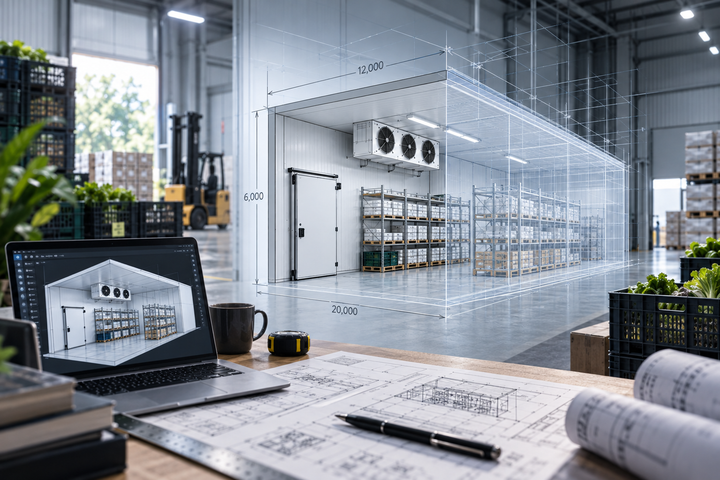
You receive an enquiry for a walk-in freezer. 12m x 20m x 6m. Standard enough. You call the client, set up a site visit, and show up on time. You do the small talk. You take the measurements to make sure the room fits. You walk outside to find a spot for the condensing unit so you know how the pipe runs. The client asks a few questions — maybe about panel thickness, maybe about evaporator brands. You answer them. You activate the sales script. You check the power supply to show them you're thorough. You know your trade. You've done this a hundred times.
Then you go back to the office. You sketch the layout. You run the heat load. You do the engineering design, the costing, the quotation. You hit send.
And you wait.
A few days go by. You follow up.
Nothing.
You follow up again.
Ghosted.
Again.
You did everything right. Everything you were trained to do. And somehow, you still lost the job.
Here's what happened.
You might call it something different where you are. Cold room. Walk-in freezer. Walk-in cooler. Some of you just say "walk-in" and everyone in the room knows what you mean. Doesn't matter. The box is the same. The problem is the same. And the fix is the same.
The Two-Language Problem
There are two people in every cold room sale. The contractor and the client. And they are speaking completely different languages.
The contractor speaks refrigeration engineering. Heat load. Compressor horsepower. Pipe diameter. Evaporator brands. These are the things we were trained to care about, and we care about them deeply. We should. They're what make the room work.
The client speaks business. Storage capacity. How many pallets fit. Whether the racking matches their picking workflow. Whether the room can scale when their business grows. Total cost of ownership over five years, not the upfront price of a compressor.
Here's the brutal part: the client is the one paying.
You can have the most technically perfect design in the world. If you never answered the question your client was actually asking, none of that engineering matters. The client doesn't know what a good heat load calculation looks like. They don't need to. They need to know their product will stay cold, their staff can work efficiently, and the investment makes sense for their business.
The entire meeting was spent speaking a language they don't understand, answering questions they never asked. They nodded. They were polite. But they were never going to sign.
How the Industry Trained You to Do This
This is not your fault.
Refrigeration courses teach you thermodynamics. They teach you pipe sizing. They teach you system design. Nobody teaches you how a distribution business works. Nobody teaches you what a warehouse manager worries about at 6am. Nobody teaches you that the client's biggest concern isn't your compressor brand — it's whether they can ship orders on time during peak season.
Supplier reps don't help either. They train you on their equipment. They give you spec sheets and brand comparisons. They want you to sell their compressors, their evaporators, their panels. They're not incentivized to teach you business consulting.
The entire industry has optimized for technical competence. And technical competence is necessary. But it is not sufficient. A perfectly designed cold room that doesn't match the client's business is a perfectly designed failure.
The gap isn't your engineering. The gap is everything we were never taught.
What Your Client Actually Wanted
Let's go back to that ghosted enquiry. The 12m x 20m x 6m walk-in freezer.
You showed up and measured the space. Good. But did you ask how many kilos of product they move per day? Did you ask what their picking process looks like? Did you ask whether they're planning to add a second shift in the next year?
The client gave you 12m x 20m x 6m because that's what they think they need. They're not a refrigeration engineer. They're guessing. And if you treat that guess as a real requirement — if you size the room to the number they pulled out of the air instead of designing it around their business — the deal is already slipping away. The contractor who steps in as a mentor, who asks the questions that reveal what the room actually needs to be, will close the deal. Not because they have a better compressor. Because they designed the room. The other guy just quoted the dimensions.
If you take that guess and build a room around it without understanding the business behind it, you might build the wrong room. And when the room doesn't work — when the racking configuration fights their workflow, when the capacity bottlenecks their growth — they'll blame you. Not the guess they gave you. You.
Here's what clients actually care about, whether they say it out loud or not:
Storage capacity matched to their business size. Not just "how big is the room," but "how much product do I need to store today, and what does that look like in two years?" A room that fits the space but falls short of throughput is a liability.
Racking that fits their business nature. A seafood distributor's picking workflow is nothing like a bakery's. The racking configuration determines the forklift or reach truck type, which determines the aisle width. And only once all of that is locked do you step in to position the evaporator — so it doesn't end up blocking a racking bay or choking the airflow. Get the sequence backwards and that's not a cold room. That's an obstacle.
Room layout that integrates with operations. Where does the product come in? Where does it go out? Where is the dock? Where is the prep area? What kind of packaging arrives — pallets or loose items? What's the daily load? Do they need an ante room to stage incoming product while the team reorganizes the space for first-in-first-out? Is there a dedicated spot for loose items, or does everything need to go into racking? A cold room isn't a standalone box. It's a node in a production line. Miss any of these and it's not a room. It's a bottleneck.
Total cost of ownership. The client doesn't care about your compressor price. They care about energy bills, maintenance costs, and whether the room will still perform in year five. If you're only talking about the upfront number, you're leaving the real conversation on the table.
None of these require a better compressor. None of these show up in a heat load calculation. All of them matter more than your equipment list.
The Shift
Here's what that winning meeting actually looks like.
You've already done the homework. Upgrade or new build. Their industry. You know before you sit down whether you're designing for a baker or a seafood distributor.
Then you don't talk about the room.
You ask about daily load. Not the freezer dimensions — how many tons move through on a heavy day. They describe the bottlenecks. The dock backup at 7am. The product that sits too long. The overtime they can't schedule.
Then you ask about growth. Five years. Ten years. Most of them are open about their revenue. And you have your own data — X million in revenue maps to roughly Y pallets of capacity. You can size the room from that conversation before you draw a wall.
Then SKUs. That sets the racking. The racking sets the forklift. The forklift sets the aisle width. Then incoming packaging size — that one number sets the racking bay height, which sets the total ceiling height. Every dimension is a business decision now. None of them came from a catalogue.
Only after all of this do you get to the engineering. Evaporator placement. Plant room. The heat load calculation steps into a room that was already the right shape before you touched it.
They walked in expecting a quote for a box. They walk out having worked with someone who understood their revenue, their SKU mix, their driver's turning radius, their packaging dimensions, and the thing they won't say out loud — that the room they buy today needs to work for the business they'll be in five years.
Next Time
You noticed I kept coming back to one thing in "The Shift": SKUs decide the racking. The racking decides the forklift. The forklift decides the aisle width.
But I didn't tell you how to actually do it.
How many SKUs is too many for selective racking? When do you switch to narrow aisle? What's the tipping point where a client's product variety forces a completely different layout strategy — and how do you spot it before you draw a single bay?
Next issue: the SKU decision tree. The one that saves you from building a room that fights the client's picking workflow from day one.
FAQ
- What should I focus on when designing a cold room for a client?
- Focus on understanding the client's business needs, such as daily load, growth potential, and racking requirements, rather than just technical specifications like compressor horsepower.
- Why do clients care more about storage capacity than compressor specifications?
- Clients prioritize storage capacity and operational efficiency because these factors directly impact their business operations, such as shipping orders on time and managing inventory.
- How can I improve my communication with clients during cold room sales?
- Ask questions that reveal the client's operational challenges and future growth plans, rather than relying solely on technical jargon or specifications.
- What is the total cost of ownership in cold room design?
- Total cost of ownership includes energy bills, maintenance costs, and the long-term performance of the cold room, which are more important to clients than just the upfront price of equipment.
- What is the significance of understanding SKUs in cold room design?
- Understanding SKUs helps determine the racking configuration, which influences the overall layout and efficiency of the cold room, ensuring it meets the client's operational needs.